So you want longer, stronger, shinier and healthier-looking hair? You are certainly not alone.
For many people, beautiful hair is not simply about length. It is about having a healthy scalp, minimizing breakage, maintaining moisture, protecting the hair from unnecessary damage and giving the strands the nutrients they need to grow normally.
And there is an important distinction to understand: your hair may be growing normally while appearing not to grow. If the ends are constantly breaking, splitting or being damaged by heat and chemicals, you may lose length almost as quickly as you gain it.
So, how do you keep your hair healthy and pretty?
The answer is not one miracle oil, expensive shampoo or vitamin pill. Healthy hair usually comes from a combination of good nutrition, sensible hair-care practices, scalp care and avoiding unnecessary damage.
Here are 12 habits worth adopting.
Read Also: Lilian Muli: Full Biography — Age, Family, Marital Status, Children, Tribe, Lifestyle & Net Worth
1. Eat for healthy hair
Your hair is made largely of a protein called keratin, so your diet matters.
Instead of looking for one “superfood” for hair growth, aim for a balanced diet containing adequate protein, fruits, vegetables, whole grains and healthy fats.
Good choices include:
- Eggs
- Fish
- Beans and lentils
- Chicken and other lean meats
- Milk and other dairy products
- Groundnuts and other nuts
- Seeds
- Whole grains
- Green leafy vegetables
- Avocados
- Fruits
Protein is particularly important because inadequate protein intake can contribute to hair shedding.
Iron, zinc, vitamin D, vitamin B12 and other nutrients also play roles in normal hair growth. However, more is not necessarily better. Taking large quantities of supplements without knowing whether you are deficient can sometimes do more harm than good.
2. Don’t automatically reach for biotin
Biotin has become one of the most popular ingredients in hair-growth supplements.
But there is a problem with the way it is marketed.
Biotin is important for normal metabolism, but taking extra biotin does not automatically make hair grow faster or thicker if you already have enough.
Biotin deficiency is uncommon, and supplementation is most useful when a genuine deficiency exists or when a healthcare professional recommends it.
There is another reason not to take high-dose biotin casually: large amounts can interfere with certain laboratory blood tests.
So rather than thinking, “My hair is weak, therefore I need biotin,” consider your overall diet and, if you are experiencing unexplained hair loss, speak to a healthcare professional about possible causes.
3. Keep your scalp clean
Healthy hair begins with a healthy scalp.
Sweat, oil, dead skin, styling products and environmental dirt can accumulate on the scalp. How frequently you should wash depends on your hair type, scalp condition, hairstyle and how much product you use.
The objective is not to wash your hair as often as possible.
It is to find a routine that keeps the scalp clean and comfortable without unnecessarily drying or damaging the hair.
If you experience persistent itching, scaling, sores, excessive dandruff or an unusual smell from the scalp, don’t simply keep adding hair products. A persistent scalp problem may require medical attention.
4. Be gentle when washing
Hair is particularly vulnerable when it is wet.
Avoid aggressively rubbing, twisting or pulling the strands during washing. Instead, concentrate shampoo primarily on the scalp and allow the lather to clean the hair as it is rinsed.
A conditioner can help reduce friction and make the hair easier to detangle.
For curly, coily or tightly textured hair, gentle handling can be especially important because excessive manipulation can contribute to breakage.
5. Moisturize — but understand what that means
Dry-looking hair does not necessarily mean that you need to pour more oil onto it.
Oils can help reduce friction and may help protect the hair shaft, but they do not replace water or a proper conditioning routine.
A good hair-care routine may include:
Cleanse → condition → gently detangle → moisturize as appropriate → protect the hair.
Different hair types respond differently to products, so pay attention to how your own hair behaves rather than following every viral hair-care trend on social media.
6. Stop treating your hair like it is indestructible
Hair can be surprisingly strong, but repeated physical and chemical stress can eventually take its toll.
Frequent:
- Straightening
- Bleaching
- Relaxing
- Tight braiding
- Extensions
- Aggressive brushing
- Excessive heat
- Repeated colouring
can weaken the hair.
You don’t necessarily have to abandon every styling method you enjoy. The key is moderation and proper technique.
If your hair becomes unusually dry, brittle or starts breaking after a particular treatment, consider reducing or stopping that treatment.
7. Be careful with heat
Hair dryers, flat irons, curling irons and other heated tools can make styling easier, but excessive heat can damage the hair shaft.
If you use heat:
- Avoid unnecessarily high temperatures.
- Don’t repeatedly pass a hot tool over the same section.
- Give your hair breaks between intensive heat styling.
- Consider using a suitable heat-protective product.
- Never assume that more heat equals a better result.
If your hair is already dry or damaged, reducing heat exposure may make a noticeable difference.
8. Watch those tight hairstyles
A beautiful hairstyle can become a problem when it repeatedly pulls on the hair.
Very tight braids, ponytails, cornrows, extensions and other styles that place constant tension on the hairline can contribute to traction alopecia, a type of hair loss caused by prolonged pulling.
Pay attention to warning signs such as:
- Pain during or after styling
- Headaches from a tight hairstyle
- Tenderness around the hairline
- Small bumps
- Broken hairs around the edges
- Receding hairline
A hairstyle should not have to hurt to look good.
If a style is painful, it is too tight.
9. Protect your hair while sleeping
Night-time care is easy to overlook.
Repeated rubbing against a rough pillowcase can contribute to friction and tangling, particularly for curly or tightly textured hair.
Some people find it helpful to sleep with a satin or silk bonnet, scarf or pillowcase.
You can also loosely braid or otherwise secure longer hair before bed if that reduces tangling.
The goal is simple: reduce unnecessary friction and manipulation while you sleep.
10. Don’t confuse hair growth with hair retention
This is one of the most important lessons for anyone trying to grow long hair.
Your follicles may be producing new hair perfectly well, yet your hair may appear to remain the same length because the older ends keep breaking.
Think of it this way:
Growth happens at the scalp. Length is retained at the ends.
If you want longer hair, don’t focus only on stimulating the roots. Protect the length you already have.
That means minimizing:
- Split ends
- Excessive heat
- Harsh chemical processing
- Rough brushing
- Tight hairstyles
- Excessive manipulation
Regular trimming can remove damaged ends and make the hair look neater, but trimming does not make hair grow faster from the scalp.
11. Drink enough water — but don’t believe every “hair detox” claim
Water is essential for your body, and staying adequately hydrated is part of maintaining general health.
However, there is no magic rule that everyone must drink exactly eight or ten glasses every day specifically to make their hair grow.
Your fluid requirements vary depending on factors such as body size, activity, weather, diet and other circumstances.
Drink regularly and pay attention to your body’s needs. In hot conditions or after exercise, you may need more fluids.
And remember: water does not “flush toxins out of your hair follicles” in the way some beauty advertisements suggest.
12. Know when hair loss is more than a beauty problem
A little hair shedding is normal. Hair naturally goes through growth and resting cycles, and some strands are shed every day.
But sudden or excessive hair loss deserves attention.
Consider seeing a doctor or dermatologist if you notice:
- Sudden heavy shedding
- Bald patches
- A rapidly receding hairline
- Persistent scalp itching or inflammation
- Hair loss accompanied by other unexplained symptoms
- Significant thinning that continues for months
- Hair loss after an illness, major stress or significant dietary change
Hair loss can have many possible causes, including genetics, hormonal changes, nutritional deficiencies, certain medications, scalp conditions and other medical issues.
The earlier the underlying cause is identified, the better.
Read Also;’ What Happens to My Skin When I Take a Hot Shower?
What about hair oils?
Hair oils have been used for generations, and some can be useful as part of a hair-care routine.
Coconut oil, for example, has been studied for its ability to reduce some forms of protein loss from the hair shaft. Other oils may help with lubrication, softness and reducing friction.
But be careful with claims that a particular oil will “grow your hair three times faster” or “activate dormant follicles overnight.”
Those claims are usually far stronger than the evidence behind them.
An oil can make your hair look shinier and feel softer without actually increasing the biological rate at which your follicles produce hair.
What about expensive hair supplements?
Before spending money on a shelf full of hair vitamins, ask yourself a simple question:
Do I actually have a nutritional deficiency?
If your diet is already adequate, taking large amounts of individual vitamins may not give you the spectacular results promised by advertisements.
In some cases, excessive intake of certain nutrients can actually cause problems.
If you have persistent hair loss, it is more sensible to investigate the cause than to keep buying increasingly expensive supplements.
A simple healthy-hair routine
You don’t need a bathroom cabinet filled with dozens of products.
A practical routine could look something like this:
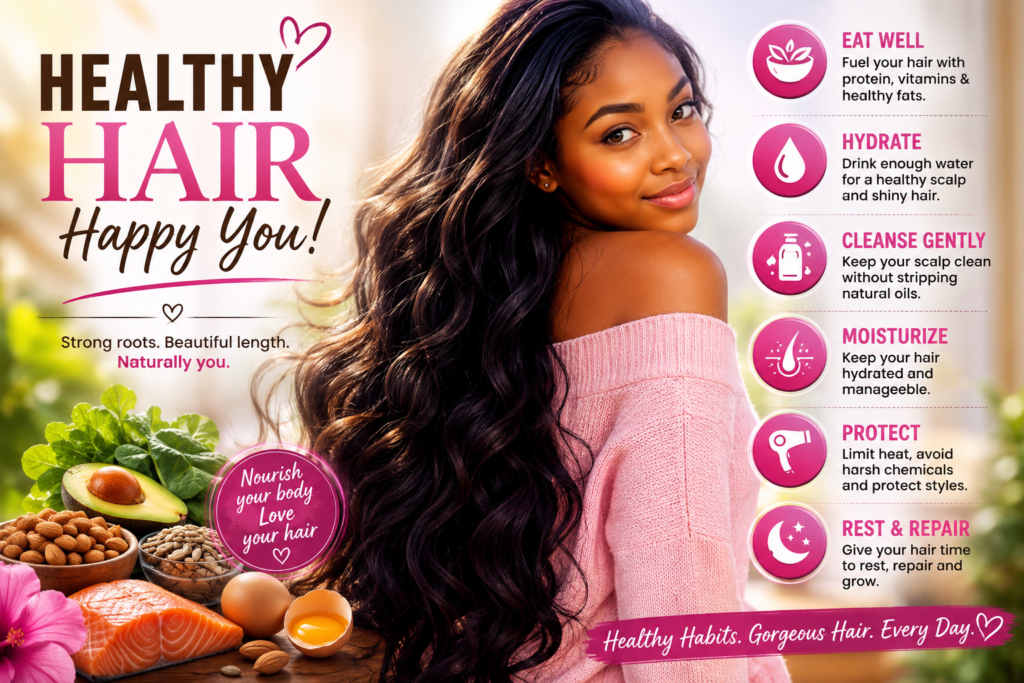
Wash: Clean your scalp according to your hair type and lifestyle.
Condition: Use conditioner to improve manageability and reduce friction.
Detangle gently: Avoid aggressive pulling, especially when the hair is wet.
Moisturize: Use products that suit your hair and help maintain softness and manageability.
Protect: Reduce unnecessary heat, chemical damage and physical tension.
Sleep carefully: Minimize friction and tangling at night.
Eat well: Get enough protein and a varied range of nutrients.
Watch your scalp: Persistent itching, scaling, inflammation or unusual hair loss should not simply be covered up with styling products.
The bottom line
Beautiful hair isn’t created by one miracle ingredient.
It is built through hundreds of small decisions: what you eat, how you wash your hair, how gently you handle it, how often you expose it to heat and chemicals, how tightly you style it and how well you look after your scalp.
And if your goal is long hair, remember the most important principle:
You don’t only need to grow hair. You need to retain it.
Healthy growth begins inside the follicle, but beautiful length depends heavily on protecting the hair that has already grown.
So eat a balanced diet, take care of your scalp, treat your strands gently, avoid unnecessary damage and don’t fall for every miracle hair-growth claim that appears on the internet.
Your hair doesn’t need a miracle.
It needs consistency.
Never Miss a Story: Join Our Newsletter